

Why Are Bamboo Fibre Fabrics Favoured by Home Textile Retailers?
In recent years, as consumers increasingly demand comfort, natural materials, and sustainability, bamboo fiber fabrics have shifted from a niche category to a more mainstream option for home textiles. According to market research, the use of bamboo fiber fabrics in home textiles (such as duvets, bed linens, and pillowcases) is growing rapidly. Bamboo sheets manufacturer from China offers a unique combination of “functionality, emotional appeal, and sustainability,” making it an exciting new fabric for brand retailers to focus on.
1. The Core Natural Properties of Bamboo Fiber Fabrics
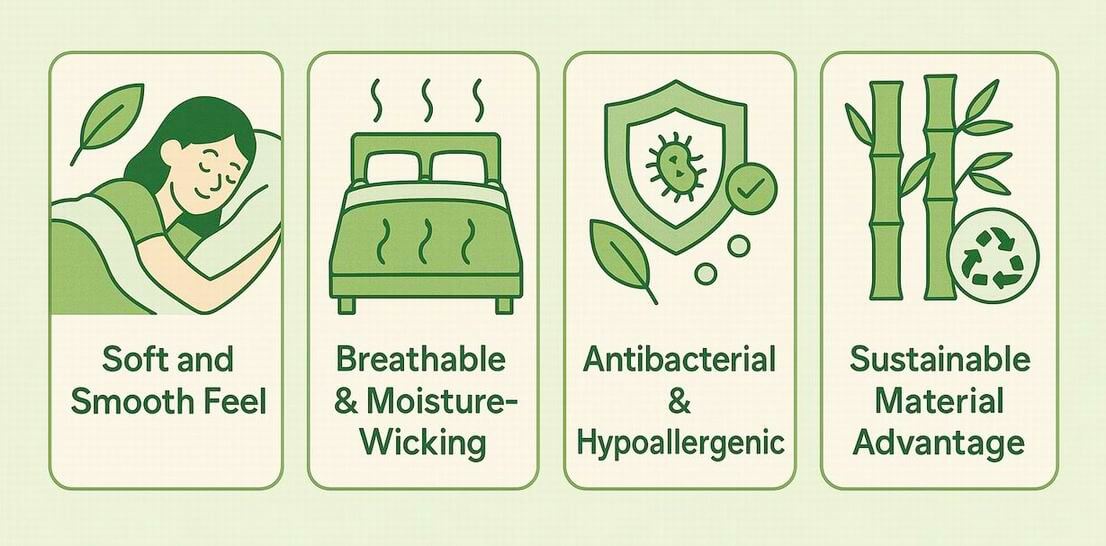
Bamboo fiber fabrics possess several inherent qualities that give them a strong advantage in home textiles, particularly for bedding and sleepwear. Key attributes include:
— Soft and Smooth Feel: Many consumers find bamboo fiber fabrics feel smoother and silkier compared to cotton.
— Excellent Breathability and Moisture-Wicking Performance: Bamboo fiber’s structure allows for superior air circulation and moisture management. This helps regulate temperature and expel sweat during sleep, making it an ideal choice for bedding.
— Antibacterial and Hypoallergenic Properties: Bamboo fiber naturally resists bacteria, making it perfect for those with sensitive skin. It’s also easier to resist dust mites.
— Sustainable Material Advantage: Bamboo is a fast-growing plant, making it highly renewable. It also requires less water and pesticides compared to traditional cotton.
In terms of functionality, bamboo fiber excels in comfort, environmental adaptability, and skin sensitivity, making it an attractive option for brands focusing on natural performance.
2.Advantages Over Organic Cotton, Linen, and Other Fabrics
When considering fabric options, brand retailers need to weigh the pros and cons of various natural fibers (e.g., organic cotton, linen, bamboo). Here’s a quick comparison:
— Compared to Organic Cotton: While organic cotton emphasizes “minimal pesticide use and no chemical residues,” its cultivation and processing require considerable water and land resources. Bamboo, on the other hand, grows faster, is highly renewable, and generally uses less water than cotton. Additionally, bamboo’s properties—such as its cooling and moisture-wicking abilities—make it a unique choice in the premium bedding market.
— Compared to Linen: Linen fabrics are often associated with natural, rustic, or breathable designs. While linen is durable, cool, and offers a unique texture, it doesn’t have the smooth, luxurious feel of bamboo. Bamboo fabric offers a similar natural vibe but with a more refined, silky touch—ideal for those seeking a higher-end sleep experience.
— Compared to Other Regenerated Fibers (e.g., Lyocell/Modal): Bamboo fiber, when processed using regeneration methods like bamboo Lyocell, competes well with other high-performance fibers. It holds an edge in both eco-friendliness and comfort.
For brands focused on the “luxury, comfort, and sustainability” market, bamboo fiber is a competitive choice that stands out in the marketplace.
3. Bamboo Fiber Fabric Production Process
Understanding the production process of bamboo fiber helps brands manage their supply chain, select the right technologies, and ensure quality control. The general production process is as follows:
— Raw Material Harvesting: Bamboo is harvested when it reaches the appropriate maturity. The bamboo is then peeled, sliced, and transported to the fiber manufacturing plant.
— Fiber Extraction/Processing: The two most common methods for extracting bamboo fiber are:
- Mechanical Process: Bamboo is crushed and treated with enzymes or natural agents to break down the fibers. This process is environmentally friendly but costly and produces lower yields.
- Viscose Process: Bamboo is pulped and treated with chemicals to produce viscose (bamboo viscose or bamboo rayon) fibers, which are then spun into yarn and woven into fabric. This method is more commonly used, offering a smooth texture and better yield.
— Spinning/Weaving/Finishing: The fiber is spun into yarn and woven into fabric (e.g., plain weave, twill, satin). After that, the fabric is dyed, finished, and tested for quality.
— Final Inspection and Certification: Brands should ensure the fabric complies with relevant environmental or fiber source certifications. Textile properties such as colorfastness, shrinkage, and strength should also be checked.
When procuring bamboo fabric, it’s important to confirm the type of bamboo fiber used and request documentation such as process details, third-party certifications, and test reports to ensure product quality and environmental claims are met.
4. Bamboo Fiber Raw Material Origins and Certification Systems
Bamboo fiber production is mainly concentrated in Asia, with China, India, and Indonesia being the primary sources of raw materials. China, in particular, holds a competitive advantage in both bamboo cultivation and fiber processing.
Certifications to watch for include:
— Textile Safety/Environmental Certifications: Such as OEKO-TEX® Standard 100 (ensuring no harmful substances are present in the fabric) or the Global Organic Textile Standard (for fabrics made from “organic bamboo”).
— Raw Material Traceability Certification: Ensure that bamboo is sourced from sustainable, renewable plantations that do not encroach on forests or use excessive chemicals.
When purchasing bamboo fabric, always verify the origin, processing method, and certification of the materials used.
5. Common Bamboo Fiber Types in Bedding Sets
For four-piece bedding sets (comforter covers, bed sheets, pillowcases), the most commonly used bamboo fiber types include:
— Bamboo Viscose: This is the most common type, offering a great feel at a lower cost. However, brands should be cautious about the potential chemical residue and ensure environmental compliance.
— Bamboo-Linen or Bamboo-Cotton Blends: Some bedding sets mix bamboo fiber with organic cotton, linen, or polyester to enhance durability, prevent shrinkage, and keep costs manageable. This blend maintains bamboo’s comfort while improving the fabric’s structural stability.
6. Fabric Specifications and Weaving Techniques Suggestions
For bamboo fiber bedding, brand retailers should consider the following specifications and techniques:
— Weight (g/m²): Home textile bamboo fabric typically ranges from 150-200 g/m². Adjust based on the specific item, such as duvet covers or bed sheets.
— Yarn Count and Density: A finer yarn count (e.g., 40S or higher) and higher-density weaving (300 TC or higher) help achieve a smoother, more luxurious feel and a glossy appearance.
— Weaving Technique: Satin or twill weaves enhance the fabric’s drape and shine, while plain weave works well if the goal is breathability and a more natural texture.
— Finishing Treatments: Bamboo fiber fabrics can undergo treatments like wrinkle resistance, non-formaldehyde finishing, antibacterial treatment, and machine-wash durability. These features can be a key selling point.
— Shrinkage and Strength Testing: Bamboo fabric can shrink slightly during the first wash, so it’s essential to ensure that the fabric has been pre-washed and shrink-tested.
— Colorfastness and Dyeing: If the fabric is dyed or printed, verify that the dyes used are bamboo-friendly and meet environmental standards.
Retailers should review these parameters with suppliers during the sampling and production process to ensure the final product meets quality and consistency expectations.
7. Bamboo Fiber Blending Options & Performance Optimisation Strategies
To strike the right balance between cost, functionality, and durability, brand retailers may consider the following blending and optimisation strategies:
— Bamboo + Organic Cotton Blends: For instance, a 70% bamboo + 30% organic cotton blend provides the comfort of bamboo while leveraging cotton’s structural stability and availability.
— Bamboo + Linen Blends: Ideal for summer collections, blending bamboo with linen enhances the coolness and breathability of the fabric.
— Bamboo + Functional Fibers (e.g., Stretch or Wrinkle-Resistant): Adding a small amount of elastic fiber to the edges of bed sheets or pillowcases helps improve fit and durability.
By exploring these blends and optimisation strategies, brand retailers can target different market segments and price points (e.g., luxury, summer collections, or sensitive-skin lines) to meet diverse consumer needs.