

Thread Count, Yarn Count & GSM Explained: What Should Confirm Before Quotation?
When it comes to bedding quotations, it’s never just about a single number. The final cost, hand feel, durability and market positioning are determined by a combination of specifications rather than one individual parameter.
1.Understand What Yarn Count Actually Means
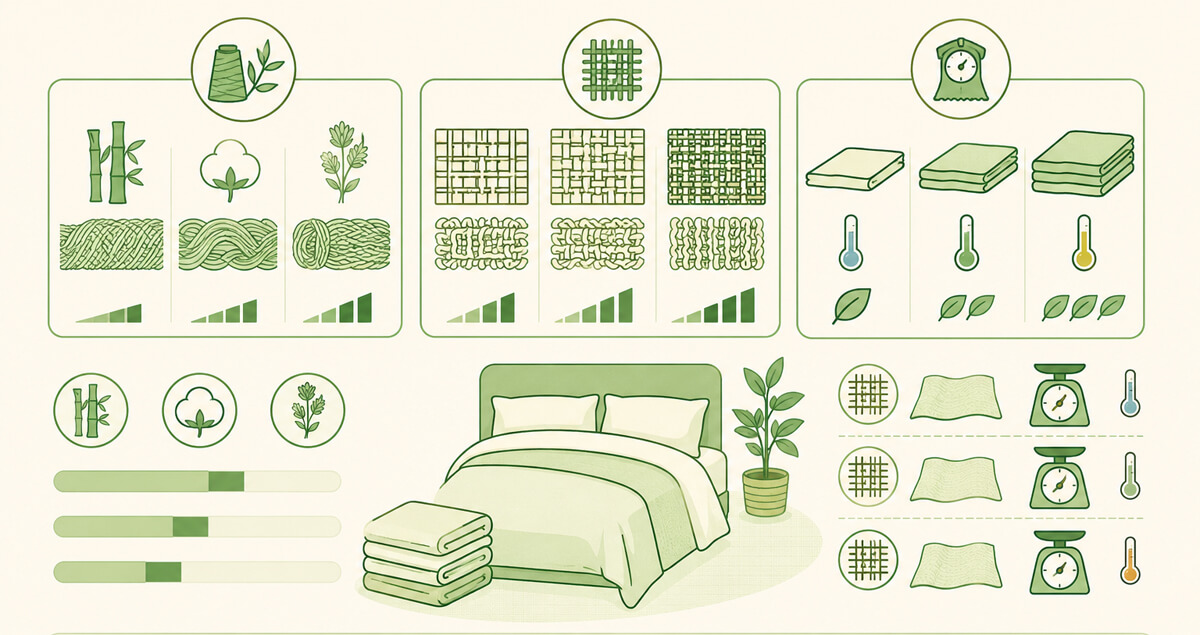
Yarn count is commonly used to indicate the fineness of the yarn. Using the standard English cotton count system as an example, the higher the number, the finer the yarn. For instance, 40S is finer than 21S, while 60S is finer than 40S.
Finer yarns generally require better-quality cotton fibres, more stable spinning processes and higher production costs. As a result, they are often used in higher-end bedding collections. However, a higher yarn count does not automatically mean a better product. While finer yarns can create a softer, smoother and lighter hand feel, issues such as reduced durability, excessive cost or poor suitability for the target market may arise if the fabric density, weave construction and finishing processes are not properly matched.
——Bamboo fabrics are known for their natural moisture-wicking properties, antibacterial characteristics and silky feel. Common yarn counts typically range from 40S to 80S, while premium products may use 80S or higher, depending on the yarn technology, fibre type and supplier specifications.
——Organic cotton is commonly available in yarn counts from 40S to 80S, with mid-to-high-end products reaching 100S to 120S. Long-staple cottons such as Egyptian cotton and Pima cotton can be spun into 100S, 120S or even 160S yarns due to their longer fibres, offering a noticeably softer hand feel than standard 60S cotton.
——Linen is valued for its breathability and natural texture. Linen yarn counts are generally much lower than cotton, typically ranging from 14S to 36S. Linen should not be evaluated using the same standards as cotton. Instead, buyers should pay closer attention to the fibre origin and fabric weight.
Even at a similar yarn count, such as 60S, bamboo and organic cotton perform differently. Cotton tends to feel crisper, while bamboo offers a softer drape. Before requesting a quotation, buyers should confirm the yarn count and ensure that it is appropriate for the fibre being used.
2.The More Custom Your Product, the Higher the MOQ
Thread count refers to the total number of warp and weft yarns within one square inch of fabric.
Many overseas consumers have been influenced by the idea that a higher thread count automatically means higher quality. As a result, some buyers specifically request 400TC, 600TC or even 1000TC fabrics. However, from a manufacturer’s perspective, a higher number does not always reflect better fabric quality.
In some cases, thread count figures are inflated through the use of multi-ply yarns, repeated counting methods or marketing practices. While the number may appear impressive, the actual comfort, breathability and wash performance may not necessarily improve.
For bamboo fabrics, buyers should pay attention to genuine single-ply yarn specifications. Due to the naturally fine and soft characteristics of bamboo fibres, a thread count of 300TC to 500TC is generally sufficient to achieve a premium hand feel. Excessively high thread counts may actually reduce breathability.
For organic cotton, 200TC to 400TC is suitable for mainstream retail and hospitality markets, while 400TC to 600TC is commonly used for premium bedding collections, provided the fabric is constructed using genuine single-ply yarns.
Typical combinations of weave and thread count include:
——Percale: 200TC–400TC (single-ply yarns) – crisp, breathable and structured.
——Sateen: 300TC–600TC (single-ply yarns) – smooth, lustrous and soft.
3.GSM Is a Key Specification That Should Never Be Overlooked
GSM refers to the fabric weight measured in grams per square metre. It indicates the thickness, drape and overall material usage of the fabric.
For bedding products, a higher GSM does not necessarily mean better quality. Lower GSM fabrics are generally lighter, more breathable and faster drying, making them suitable for summer collections, warmer climates and price-sensitive markets. Medium-weight fabrics are often preferred for everyday use and year-round sales. Higher GSM fabrics provide a fuller feel and improved drape, making them suitable for air-conditioned environments, cooler seasons or premium product ranges.
However, for markets such as Australia, Southern Europe and the southern United States, excessively heavy fabrics may result in heat retention, slower drying times and potential customer complaints. GSM should therefore be considered alongside the target market, climate, season and customer profile.
——GSM range of 100–120 is considered lightweight, offering good breathability and comfort for warmer regions, although durability may be more moderate.
——GSM range of 120–150 provides a balanced combination of softness, drape, durability and value, making it a preferred option for many wholesale projects.
——GSM range of 150–180 delivers a more substantial feel with a velvet-like touch, making it suitable for autumn and winter collections or premium bamboo bedding, although breathability may be slightly reduced.
For bamboo fabrics, 120–150 GSM generally allows the material’s moisture-management and silky characteristics to perform at their best. Linen bedding commonly ranges from 150–220 GSM, with 160–200 GSM being suitable for most mid-to-high-end residential bedding collections.
# Conclusion
Bamboo, linen and organic cotton can deliver very different costs and user experiences, even when the yarn count and GSM appear similar. For brand buyers, confirming the fibre composition, weave construction and finishing processes alongside these specifications can help achieve the right balance between comfort, cost and profitability. It can also reduce sampling discrepancies, quotation variations and production risks. The more detailed the specifications are before quotation, the smoother the production process will be and the closer the final product will align with market expectations.